

India's A2 ghee market hit INR 1.05 billion in 2024 and is projected to reach INR 7.83 billion by 2033, growing at 22.3% CAGR (IMARC Group, 2024; retrieved 25 May 2026). That's three times faster than the overall ghee market. Clearly, Indian consumers are paying attention. But is the 3-4x price premium justified, or is A2 ghee just clever marketing?
The answer isn't simple. Some differences between A2 and regular ghee are backed by solid peer-reviewed science. Others are exaggerated by brands looking to justify a premium. We've worked with ghee for nearly two decades at Riks Global Foods, and we built Gheeyonnaise on 100% A2 Gir Cow Ghee because we believe the difference matters. But we also believe you deserve the full picture, not just the marketing version.
This comparison covers six dimensions: protein science, breed genetics, nutrition, digestibility, production method, and price. Every claim is sourced. Disclosure: our company uses A2 Gir Cow Ghee in its products. We've aimed to present the evidence fairly, including where the science is inconclusive.
Key Takeaways
- A2 Gir cow ghee wins on breed purity (100% A2A2 genotype), micronutrient density (3-5x more CLA and omega-3 when grass-fed), and clean production (bilona method).
- Regular commercial ghee wins on price: Rs 500-650/kg vs Rs 2,000-3,600/kg for A2 bilona ghee.
- Macro-nutrition is identical. Both have the same calories, total fat, and smoke point. The differences are in micronutrients and protein traces.
- EFSA (2009) rejected claims that A1 milk causes chronic diseases, but a 600-subject clinical trial found significantly lower GI symptoms with A2 milk (Sun et al., 2017; retrieved 25 May 2026).
- Choose A2 if you want the cleanest ingredient profile. Choose regular if budget is the priority and you don't experience digestive sensitivity.
How Do A2 and Regular Ghee Compare at a Glance?
| Parameter | A2 Gir Cow Ghee | Regular Commercial Ghee |
|---|---|---|
| Cow breed | Gir, Sahiwal, Red Sindhi | Holstein Friesian, crossbred |
| Beta-casein type | 100% A2 | A1/A2 mix (35-60% A2) |
| Calories per tbsp | 120-130 kcal | 120-130 kcal |
| CLA content | 300-500% higher (grass-fed) | Baseline |
| Omega-3:Omega-6 | ~1:1 | ~5.7:1 |
| Beta-carotene | 3-7x higher | Baseline |
| Smoke point | 232-252°C | 232-252°C |
| Lactose content | <0.05-2.9 mg/100g | <0.05-2.9 mg/100g |
| Production method | Bilona (hand-churned) | Industrial cream separation |
| Price per kg | Rs 2,000-3,600 | Rs 500-650 |
What Is the A1 vs A2 Protein Difference?
A2 wins on protein science. The difference comes down to a single amino acid, and it changes how your gut processes the protein. In 2022, a peer-reviewed study in Frontiers in Nutrition confirmed that A1 and A2 beta-casein differ by a single amino acid at position 67: histidine in A1, proline in A2 (Giribaldi et al., Frontiers in Nutrition, 2022; retrieved 25 May 2026). That one substitution changes everything. When you digest A1 casein, gastrointestinal enzymes can cleave the protein chain at position 67 and release a peptide called BCM-7 (beta-casomorphin-7). A2 casein's proline at the same position blocks this cleavage entirely.
Why does this matter? BCM-7 is an opioid peptide that may slow gut motility and trigger inflammation in some individuals. A 2025 review in MDPI Applied Sciences found that A1 casein consumption "may negatively influence gut health by altering microbial composition, reducing intestinal motility, and increasing colonic fermentation" (MDPI Applied Sciences, 2025; retrieved 25 May 2026).
Here's the honest caveat. EFSA reviewed the evidence in 2009 and concluded that "a cause and effect relationship is not established between the dietary intake of BCM-7 and non-communicable diseases" (EFSA, 2009; retrieved 25 May 2026). The digestive effects are better supported than the disease claims. For ghee specifically, clarification removes nearly all protein, so the A1/A2 distinction matters less here than in milk.
Verdict: A2 wins on protein science, but the practical impact in ghee is smaller than in milk because most casein is removed during clarification. If you're sensitive to dairy, the absence of even trace A1 residues may still matter.
Which Cow Breed Produces Better Ghee?

A2 Gir cow ghee wins decisively on breed. You simply can't get guaranteed 100% A2 ghee from crossbred Holstein herds. In 2022, researchers genotyped approximately 4,000 cattle across 27 Indian native breeds and found that every single animal from indigenous dairy breeds (Gir, Sahiwal, Red Sindhi, Tharparkar, Rathi) carried only the A2A2 genotype, with the A2 allele at complete fixation (frequency = 1.0) (Mukesh et al., 3 Biotech, 2022; retrieved 25 May 2026). Holstein Friesian cattle, by contrast, carry the A2 allele at only about 35%. Jersey cows sit around 60%.
The Gir cow originated in the Gir forests of Gujarat's Kathiawar region. It's unmistakable: massive convex forehead, long pendulous ears shaped like dried leaves, and distinctive half-moon horns. India's 20th Livestock Census (2019) counted 6.86 million Gir cattle (DAHD, Government of India, 2019; retrieved 25 May 2026). The breed has been exported to Brazil, the USA, and Mexico for dairy improvement programmes.
What we've seen firsthand: When we source Gir cow milk for our spreads, the ghee's colour is noticeably deeper golden compared to ghee from crossbred herds. That's not a dye or additive. It's higher beta-carotene from grass-feeding, which the Gir cow's digestive system converts more efficiently.
Gir cows also produce milk with 4.5-5.5% fat content, compared to 3.5-4% for Holstein Friesian crossbreeds. Higher fat content means more ghee per litre of milk, and a richer flavour profile.
Verdict: A2 Gir cow ghee wins decisively. You can't get 100% A2 ghee from crossbred Holstein herds. The breed determines the protein, and only indigenous breeds guarantee A2A2 purity.
Which Has Better Nutritional Value?

A2 Gir cow ghee wins on micronutrients, but only when the cows are grass-fed. The breed alone doesn't guarantee nutritional superiority. In 2018, research in the Journal of Dairy Science established that grass-fed cow ghee contains 300-500% more conjugated linoleic acid (CLA) and 2-5x more omega-3 fatty acids than grain-fed equivalents. The omega-3 to omega-6 ratio sits at roughly 1:1 in grass-fed ghee, compared to 5.7:1 in grain-fed. Beta-carotene is 3-7x higher, which explains why A2 Gir cow ghee has that deep golden colour while commercial ghee looks pale.
An important distinction: these micronutrient advantages come primarily from the cow's diet (grass-fed vs grain-fed), not the breed alone. A Gir cow fed grain pellets in a factory farm would produce nutritionally inferior ghee to a well-fed crossbred cow on open pasture. What makes A2 Gir cow ghee special is that most producers combine the right breed with traditional grazing practices.
Where both types are identical: calories (120-130 kcal per tablespoon), total fat (14g), butyric acid content (3-4%), and smoke point (232-252°C). If you've read our article on what science says about ghee in 2026, you'll recognise butyric acid as the gut-health compound. Both A2 and regular ghee deliver it equally.
Verdict: A2 Gir cow ghee wins on micronutrients, but only when the cows are grass-fed. The breed alone doesn't guarantee nutritional superiority. Ask your supplier about feeding practices, not just the A2 label.
Is A2 Ghee Easier to Digest?
A2 ghee has a slight edge for hypersensitive individuals, but for most people, both types digest equally well. In 2017, a 600-subject randomised, crossover, double-blind trial found that all six gastrointestinal symptom scores (bloating, abdominal pain, flatulence, stool frequency, stool consistency, borborygmus) were significantly lower after consuming A2 milk compared to conventional A1/A2 milk, with P-values below 0.0001 at both 1-hour and 3-hour intervals (Sun et al., Nutrition Journal, 2017; retrieved 25 May 2026). That's the largest human trial on A1/A2 to date, and the results are strong.
But here's what matters for ghee: clarification removes virtually all protein. Properly made ghee contains less than 0.01% protein, compared to 0.85% in butter, a 99% reduction. Lactose drops to below 0.05-2.9 mg per 100g, versus 685-688 mg in butter. Both A2 and regular ghee are effectively lactose-free and casein-free after proper clarification.
So why might A2 ghee still matter for sensitive individuals? Trace protein residues. Not all ghee is clarified to the same standard, especially homemade or small-batch versions. If even microscopic A1 casein traces trigger your symptoms, A2 ghee eliminates that risk entirely.
For a deeper look at ghee's gut health connection, see our article on butyric acid in ghee and gut health.
Verdict: A2 ghee has a slight edge for hypersensitive individuals. For most people, properly clarified ghee of either type should digest fine. The A1/A2 difference matters far more for milk than for ghee.

Does Production Method Actually Matter?
Bilona wins on process integrity, though the nutritional advantage is plausible rather than proven. Bilona ghee, the traditional hand-churned method, requires 25-30 litres of whole milk to produce 1 kg of ghee. Industrial cream-separation methods yield 1 kg from just 8-10 litres of cream. This widely cited yield difference across India's dairy industry is the single biggest reason for the price gap.
The process itself differs fundamentally. Bilona starts with curd (dahi), which is churned with a wooden churner to separate butter (makhan) from buttermilk. The butter is then slowly heated over low flame until it clarifies into ghee. Industrial methods skip the curd stage entirely, separating cream from milk mechanically and heating it at higher temperatures for faster throughput.
Does this affect nutrition? The evidence is suggestive but not conclusive. Lower-temperature processing should theoretically preserve more heat-sensitive nutrients like vitamin K2 and certain fatty acid profiles. The fermentation step in bilona (milk to curd) also introduces beneficial bacteria cultures that may contribute to the final product's digestibility. However, no large-scale controlled study has directly compared bilona vs industrial ghee on nutrient retention.
Verdict: Bilona wins on process integrity, though the nutritional advantage is plausible rather than proven. What's certain is the milk volume difference. You're paying for 25-30 litres of whole milk per kg, not 8-10 litres of cream. That alone justifies a significant portion of the premium.
How Do Prices Compare?
Regular ghee wins on price, and it's not close. In 2025, A2 bilona ghee from reputable brands sells for Rs 2,000-3,600 per kg, while regular commercial ghee from major brands like Amul sits at Rs 500-650 per kg. That's a 3-4x premium. You can verify this yourself on any Indian e-commerce platform or at your local organic store.
Where does the premium come from? Three factors stack up:
- Milk volume: 25-30L of whole milk per kg (bilona) vs 8-10L of cream (industrial). That's 3x the raw material cost.
- Breed economics: Gir cows produce 8-20 litres per day, compared to 25-40 for Holstein Friesians. Lower yield per cow means higher per-litre cost.
- Labour: Hand-churning and slow-heat clarification can't be scaled the way centrifugal separation can.
Is the premium worth it for daily cooking? Probably not. You won't taste a difference in a tadka or a paratha. Is it worth it for a daily tablespoon in warm water, for children's food, or as the base ingredient in a clean-label spread? That depends on how much you value the micronutrient and protein-purity advantages outlined above.
Verdict: Regular ghee wins on price. The A2 premium is real and justified by raw material and labour costs, but it's not for every household or every use case.
Who Should Choose What?
Health-conscious parents feeding young children: Choose A2 Gir cow ghee. The micronutrient advantages (CLA, omega-3, beta-carotene, vitamin K2) matter more during growth years. It's also what we use as the base in our Classic Spread for exactly this reason.
Budget-conscious families using ghee daily for cooking: Regular ghee is perfectly fine for tadkas, parathas, and general cooking. The macro-nutrition is identical, and the high heat of cooking reduces micronutrient differences. Save A2 ghee for raw or low-heat uses where the nutritional advantage is preserved.
People with dairy sensitivity or digestive issues: Try A2 ghee first. If even properly clarified regular ghee causes discomfort, the trace A1 casein residues may be the culprit. A2 eliminates that variable entirely.
Ayurvedic practitioners and traditional households: The Charaka Samhita (Sutrasthana 27) describes ghee as the "best among all unctuous substances" and classifies it as Ajasrika Rasayana, a daily rejuvenative. Classical Ayurveda specifically references desi cow ghee, not crossbred. A2 Gir cow ghee aligns closest with what the texts describe.
Frequently Asked Questions
Is A2 ghee really better than regular ghee?
For micronutrients, yes, when the A2 ghee comes from grass-fed cows and is made using the bilona method. CLA content is 300-500% higher, omega-3 ratios are significantly better, and beta-carotene is 3-7x higher. For macro-nutrition (calories, total fat, smoke point), they're identical.
Can lactose-intolerant people eat ghee?
In most cases, yes. Properly clarified ghee contains less than 2.9 mg of lactose per 100g, compared to 685-688 mg in butter. That's a 99%+ reduction. Both A2 and regular ghee are effectively lactose-free. Protein drops below 0.01%, making ghee safe for the vast majority of lactose-sensitive individuals.
Why is A2 ghee so expensive?
Three factors: bilona production requires 25-30 litres of whole milk per kg of ghee (vs 8-10L of cream for industrial methods), Gir cows produce less milk per day than crossbreeds, and hand-churning can't be mechanised at scale. The 3-4x premium reflects genuine input costs, not just marketing.
How can I verify if my ghee is genuinely A2?
Look for breed certification (Gir, Sahiwal, Red Sindhi), third-party lab testing for A2 beta-casein, and transparency about the source farm. Trustworthy brands name the breed, the region, and the production method. If a label says "A2 ghee" but can't tell you which breed or farm it comes from, be sceptical.
What did EFSA actually say about A1 vs A2 milk?
EFSA (2009) concluded that no cause-and-effect relationship is established between BCM-7 intake and non-communicable diseases like heart disease or diabetes. However, EFSA did acknowledge that BCM-7 may cause gastrointestinal disturbances. The digestive benefits of A2 are better supported than the disease-prevention claims. Always consult your healthcare provider for specific concerns.
The Final Verdict
| Category | Winner |
|---|---|
| Protein science (A1/A2) | A2 Ghee |
| Breed genetics | A2 Ghee (Gir cow) |
| Micronutrient density | A2 Ghee (grass-fed) |
| Digestibility | Slight edge to A2 |
| Production method | A2 Ghee (bilona) |
| Price | Regular Ghee |
| Overall | A2 Gir Cow Ghee (for quality-conscious buyers) |
A2 Gir cow ghee wins five of six categories. Regular ghee wins on the one dimension that matters most to many families: price. If your budget allows and you're choosing ghee for health reasons (children's nutrition, digestive sensitivity, or daily supplementation), A2 Gir cow bilona ghee is the stronger choice. If you're reaching for ghee to fry a tadka, regular ghee does the job just fine.
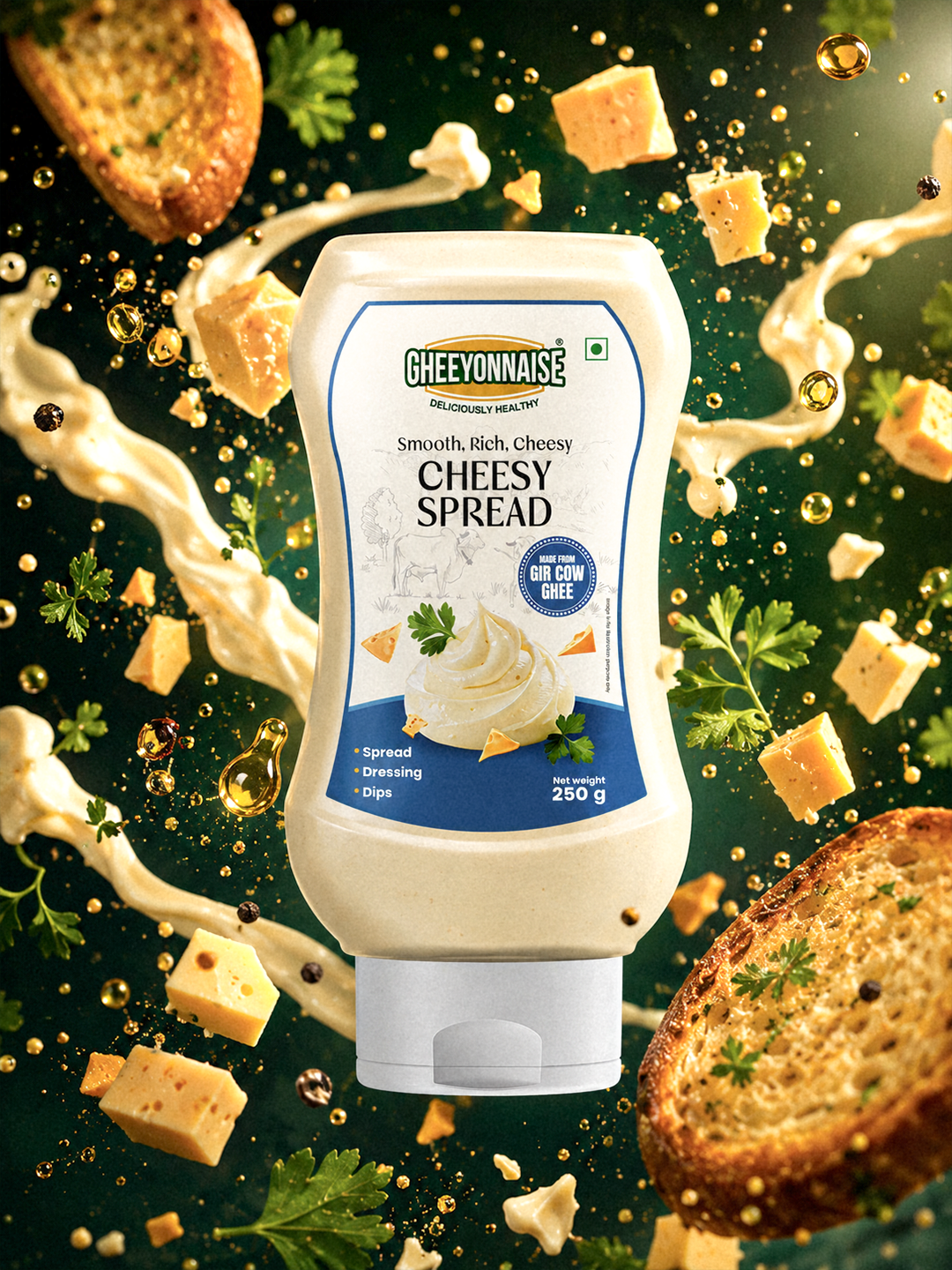
Want to try A2 Gir cow ghee in a format that's ready for sandwiches, wraps, and lunchboxes? Explore all five Gheeyonnaise flavours, each made with 100% A2 Gir Cow Ghee.

0 comments