

Your colon cells are picky eaters. They don't run on glucose like most cells in your body. Instead, they depend on a short-chain fatty acid called butyric acid for up to 70% of their energy. And one of the richest dietary sources of butyric acid? The same golden ghee that's been a staple in Indian kitchens for over 3,000 years.
That's not folklore. It's biochemistry.
In 2024, a peer-reviewed analysis in the Journal of Ayurveda and Integrative Medicine confirmed that cow ghee contains 3.17% butyric acid — making it one of the most concentrated food sources of this gut-supporting compound (Kataria & Singh, Health benefits of ghee, 2024). Meanwhile, the global gut health supplement market hit US$16 billion in 2026 (Persistence Market Research, 2025). People are spending billions looking for what Indian grandmothers have been spooning into dal for centuries.
We reviewed the latest clinical trials, peer-reviewed studies, and biochemistry research to understand exactly how butyric acid in ghee supports your gut — and where the science draws the line.
Key Takeaways
- Cow ghee contains 3.17% butyric acid, the highest among common cooking fats (Kataria & Singh, 2024).
- Butyrate fuels 60–70% of colonocyte energy needs, maintaining the gut barrier that protects your bloodstream (Liu et al., 2024).
- In a 2025 clinical trial, butyrate exposure significantly reduced gut permeability in IBS patients (p = 0.034) (Scharf et al., Gut Microbes, 2025).
- Ghee packs roughly 25% short- and medium-chain fatty acids vs 12–15% in standard butter — a more concentrated source per gram consumed.

What Is Butyric Acid and Why Does Your Gut Need It?
In 2024, Liu and colleagues reported in Animal Models and Experimental Medicine that butyrate provides 60–70% of the energy colonocytes need to function (Liu et al., Role of SCFAs in host physiology, 2024). Without enough butyrate, these cells can't maintain the tight junctions that keep toxins and bacteria out of your bloodstream.
Butyric acid (C4:0) is the simplest short-chain fatty acid. Your body produces it in two ways: bacteria in your colon ferment dietary fibre into butyrate, and you can consume it directly through foods like ghee and butter. Both pathways matter.
Here's what makes butyrate special. It doesn't just feed your gut cells — it actively strengthens the barrier between your intestines and your blood. Think of colonocytes as bricks in a wall. Butyrate is both the fuel that keeps those bricks alive and the mortar that seals the gaps between them.
Worth noting: Your gut bacteria produce far more butyrate from dietary fibre than you'll ever get from ghee alone. A fibre-rich diet is the primary strategy. Ghee is a valuable dietary complement — not a replacement for vegetables, lentils, and whole grains.
In the human large intestine, short-chain fatty acids occur in a ratio of roughly 60:20:20 — that's acetate, propionate, and butyrate respectively (Nature Reviews Immunology, SCFAs linking diet, microbiome, and immunity, 2024). Butyrate may be the smallest share by volume, but it punches well above its weight in biological impact.
How Much Butyric Acid Does Ghee Actually Contain?
In 2024, Kataria and Singh's comprehensive review in the Journal of Ayurveda and Integrative Medicine measured butyric acid content across dairy fats. Cow ghee came in at 3.17 ± 0.78%, while buffalo ghee scored higher at 4.06 ± 1.71% (Kataria & Singh, Health benefits of ghee, 2024). Compare that to coconut oil and olive oil, which contain zero butyric acid.
But here's the detail most wellness blogs miss. Butter also contains roughly 3–4% butyric acid — similar to ghee on a fat-weight basis. So what makes ghee different?
Concentration. Ghee is 99.5% pure fat. Butter is about 80% fat, with the rest being water and milk solids. When you consume a teaspoon of ghee, you're getting a more concentrated dose of butyric acid per gram than a teaspoon of butter. Ghee also packs roughly 25% short- and medium-chain fatty acids combined, compared to 12–15% in standard butter.

What about A2 ghee specifically? We looked for peer-reviewed data comparing butyric acid levels in A2 vs regular ghee. The honest answer: no published study has measured a meaningful difference in butyric acid content between A2 and conventional cow ghee. The benefits of A2 ghee relate to its beta-casein protein profile (easier digestion for some people), not its fatty acid composition. We won't claim otherwise.
Our take: At Gheeyonnaise, we use A2 Gir Cow Ghee because of its cleaner protein profile and centuries of Ayurvedic preference — not because it contains "more" butyric acid. Honest ingredients mean honest claims.
Can Butyric Acid Help With IBS and Gut Permeability?
In 2025, Scharf and colleagues published a breakthrough finding in Gut Microbes: butyrate exposure significantly reduced transcellular hyperpermeability in IBS patients (p = 0.034), measured using a novel double-balloon colonoscopy model across 17 IBS patients and 17 healthy controls (Scharf et al., Butyrate and intestinal permeability in IBS, 2025). That's a fancy way of saying butyrate helped seal leaks in the gut lining.
This wasn't the first evidence. Back in 2013, a double-blind randomised controlled trial gave 66 IBS patients 300 mg/day of microencapsulated sodium butyrate. After just four weeks, participants reported significantly less abdominal pain during defecation (Banasiewicz et al., Colorectal Disease, 2013). That study remains one of the most-cited pieces of IBS-butyrate research.
More recently? In a 2024 double-blind RCT, Firoozi and colleagues gave 36 active ulcerative colitis patients 600 mg/day of sodium butyrate for 12 weeks. The results went beyond gut health: patients showed reduced faecal calprotectin (a marker of intestinal inflammation), lower hs-CRP levels, and — surprisingly — improved sleep quality and reduced anxiety (Firoozi et al., Lipids in Health and Disease, 2024).

An important caveat: these clinical trials used sodium butyrate supplements at specific dosages, not ghee itself. Nobody has run a controlled trial measuring the gut health effects of daily ghee consumption specifically. The mechanism is the same — butyric acid is butyric acid whether it comes from a capsule or a spoonful of ghee — but the dosage you'd get from dietary ghee is lower than what these trials used.
Does that mean ghee doesn't help your gut? Not quite. It means ghee contributes butyric acid as part of a broader dietary pattern. Combined with fibre-rich foods that feed butyrate-producing gut bacteria, daily ghee consumption makes nutritional sense.
How Does Butyrate Fight Inflammation in the Gut?
In 2000, Segain and colleagues published a landmark finding in Gut: butyrate inhibits NF-kB activation and IkBa degradation in intestinal cells, directly reducing the expression of pro-inflammatory cytokines (Segain et al., Butyrate inhibits inflammatory responses through NFkappaB, 2000). That study has been cited thousands of times since — and its core finding still holds up.
What does that mean in plain language? NF-kB is essentially your body's inflammation switch. When it's activated, your immune system ramps up — useful during infections, harmful when it stays on chronically. Butyrate helps keep that switch from getting stuck in the "on" position.

But there's more. Butyrate also promotes the development of regulatory T-cells (Tregs) in the gut. These are the immune cells responsible for calming down overactive immune responses — the ones that matter in conditions like Crohn's disease, ulcerative colitis, and food sensitivities. It's a two-pronged effect: butyrate dials down inflammation while simultaneously boosting the cells that maintain immune tolerance.
Here's the connection to ghee. When you drizzle ghee on your dal or use it for tadka, you're delivering butyric acid directly to your digestive system. Your body doesn't need to wait for bacterial fermentation — the butyric acid in ghee is absorbed as-is. It's a direct pipeline to your colonocytes.
The science behind the tradition: When Indian cooking pairs ghee with high-fibre foods like dal, roti, and sabzi, it creates a dual butyrate strategy — direct butyric acid from the ghee, plus fibre that feeds butyrate-producing bacteria in the colon. What seemed like intuition turns out to be nutritionally sound.
Ghee vs Butter vs Supplements — Which Delivers More Butyrate?
Ghee contains roughly 25% short- and medium-chain fatty acids combined, compared to 12–15% in standard butter. That's nearly double the concentration per gram of fat consumed. The reason? Ghee is 99.5% pure fat. Butter carries about 20% water and milk solids that dilute its fatty acid density.
But here's the honest comparison most ghee-marketing sites won't make. The clinical trials showing gut health benefits used sodium butyrate supplements at dosages of 300–600 mg per day. One teaspoon of ghee (about 5g) delivers approximately 160 mg of butyric acid. You'd need 2–4 teaspoons daily to approach the lower end of clinically studied dosages — which is, conveniently, about what most Indian households use in cooking.
What about butyrate supplements? They work — the clinical data proves it. But they're isolated compounds. Ghee delivers butyric acid alongside fat-soluble vitamins A, D, E, and K2, plus CLA (conjugated linoleic acid). Grass-fed dairy sources contain up to 500% more CLA than grain-fed alternatives (Dhiman et al., 1999, cited by LifeSpa). A supplement gives you one thing. Ghee gives you a nutritional package.
| Factor | Ghee | Butter | Butyrate Supplements |
|---|---|---|---|
| Butyric acid per gram | ~32 mg | ~28 mg | 300–600 mg/capsule |
| Fat-soluble vitamins | A, D, E, K2 | A, D, E, K2 | None |
| Lactose content | Near zero | Present | None |
| CLA content | Yes (higher in grass-fed) | Yes | None |
| Cooking versatility | High smoke point (252°C) | Low smoke point (177°C) | Not applicable |
What Does This Mean for Your Daily Diet?
In 2025, India's ghee market reached INR 3,774.5 billion and is projected to hit INR 7,532.7 billion by 2034, growing at a CAGR of 7.70% (IMARC Group, India Ghee Market Report, 2025). Indian consumers aren't just buying ghee out of tradition — they're increasingly buying it for health reasons. And butyric acid is one of the strongest scientific arguments in ghee's favour.
Here's how to think about it practically.
For gut-conscious adults
One to two teaspoons of ghee daily — on dal, in rice, or used for cooking — provides a meaningful dose of dietary butyric acid. Pair it with fibre-rich foods (lentils, whole grains, vegetables) to feed your gut bacteria's own butyrate production. This dual approach mirrors what traditional Indian meals have always done.
For parents
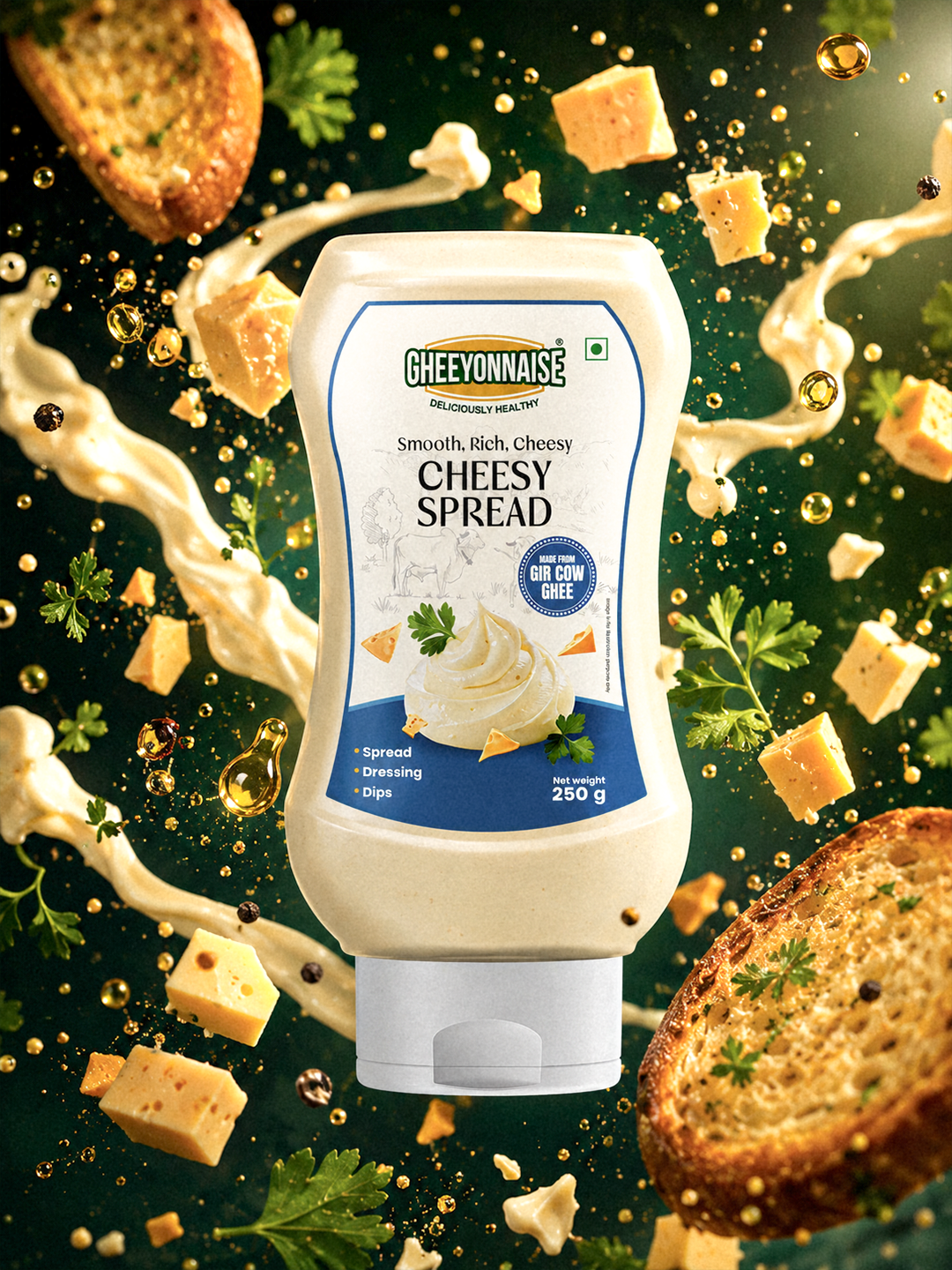
Kids' gut microbiomes are still developing. Adding ghee to rotis, parathas, or rice is a familiar, fuss-free way to include butyric acid in their diet. It's also naturally lactose-free — helpful for children with mild dairy sensitivities. Our A2 Gir Cow Ghee-based Classic Spread makes it easy to add ghee's benefits to sandwiches and snacks without the cooking step.
For fitness enthusiasts
Butyrate isn't just a gut compound. The 2024 Firoozi study showed effects on sleep quality and mood. If you're tracking recovery and performance, gut health is a pillar you can't ignore. Ghee fits macro-friendly diets and delivers nutrients that isolated MCT oil supplements don't.
One honest caveat: if you have a specific inflammatory bowel condition, consult your gastroenterologist. Dietary ghee is a food, not a treatment. The clinical trials used pharmaceutical-grade sodium butyrate at controlled dosages. Ghee supports gut health as part of a balanced diet — it doesn't replace medical care.
Frequently Asked Questions
How much butyric acid is in one teaspoon of ghee?
One teaspoon of ghee (approximately 5 grams) contains about 160 mg of butyric acid, based on the 3.17% concentration measured in cow ghee by Kataria and Singh in 2024. Two teaspoons would provide roughly 320 mg — approaching the 300 mg/day dosage used in IBS clinical trials.
Is ghee better than butter for gut health?
Ghee and butter contain similar percentages of butyric acid (3–4%), but ghee is more concentrated because it's 99.5% pure fat with no water or milk solids. Ghee also contains roughly 25% short- and medium-chain fatty acids vs 12–15% in butter. For lactose-sensitive individuals, ghee has an additional advantage: near-zero lactose content.
Does cooking with ghee destroy butyric acid?
Butyric acid has a boiling point of 164°C (327°F), which is below ghee's smoke point of 252°C. At high-heat cooking temperatures, some butyric acid may volatilise. For maximum butyric acid retention, add ghee as a finishing fat — drizzled on dal, rice, or rotis after cooking — rather than using it for deep frying.
Does A2 ghee have more butyric acid than regular ghee?
No peer-reviewed study has demonstrated a significant difference in butyric acid content between A2 and regular cow ghee. Both contain approximately 3.17% butyric acid. The benefits of A2 ghee relate to its beta-casein protein profile (A2 vs A1 protein), which may be easier to digest for some people.
Can butyric acid help with leaky gut?
In 2025, Scharf and colleagues demonstrated that butyrate exposure significantly reduced transcellular hyperpermeability (a marker of leaky gut) in IBS patients (p = 0.034) (Scharf et al., Gut Microbes, 2025). Butyrate strengthens the tight junctions between intestinal cells, which are the structures that prevent unwanted molecules from leaking into the bloodstream.
The Bottom Line
Butyric acid is one of the most well-studied short-chain fatty acids in gut health research. It fuels your colon cells, strengthens your gut barrier, and modulates inflammation through the NF-kB pathway. Ghee — at 3.17% butyric acid — is one of the richest dietary sources available.
But let's keep it honest. Ghee is a food, not a medicine. The strongest butyrate strategy combines dietary sources like ghee with fibre-rich foods that feed your gut bacteria's own butyrate production. Indian cooking has been doing this instinctively for millennia — pairing ghee with dal, whole wheat rotis, and seasonal vegetables.
What three generations of ghee-making have taught us: the best foods don't need health claims on the label. They just need honest ingredients. If you're looking for a way to include ghee's benefits in everyday meals without the cooking step, explore all five Gheeyonnaise flavours — each one made with 100% A2 Gir Cow Ghee, no palm oil, and no preservatives.
Have questions about ghee, butyric acid, or gut health? Write to us at gheeyonnaise@riksglobal.com. We'd love to hear from you.

0 comments